STAND?

Photo: Obama supporters in Des Moines, Iowa, celebrate his win in November 2008.

Do you remember the photos of people weeping with joy on the night Barack Obama was elected?  Were you feeling it yourself—the almost-impossible-to-believe euphoria of a change that had seemed out of reach?  The sense of a fairy tale come true?  Gravity overruled?  All of us floating to the ceiling laughing? 

A black man as president?  Not in your wildest dreams!  Everything about our collective past said no.  Then this dignified, intelligent man—one who promised change we could believe in—came galloping out of nowhere.  The winner. 

There were many who were not happy.  But even more of us were ecstatic.  We wept.  We leapt to our feet and wept, screaming with delight.  Everything, finally, would change.  A new America.  An end to the endless war.  An end to the international bullying and the shameful treatment of prisoners of war.  An end to the skyrocketing cost of healthcare.  And, of course, an end to the racial prejudice.  After all, Obama himself had proven the impossible was possible. 

Flash forward 12 years, though, and what has come of all that celebrated change?  The promised health care is being withdrawn and the U.S. is rattling its sabers and asylum-seekers are being thrown in detention centers and white militia members are storming into the Michigan statehouse with automatic weapons.  Then, unbelievably, a black man named George Floyd is being asphyxiated before our very eyes, pinned to the pavement by four Minneapolis policemen.  One of the police puts a knee on his neck, leaving it there for more than eight minutes even though Floyd pleads for air, saying “I can’t breathe”—even though he cries out for his mama.  The knee stays clamped after he falls unconscious and after bystanders cry out, “Did they fucking kill him, bro. . . Check his pulse.  Check it right fucking now.  The man ain’t moved yet, bro.” 

This is not the America we dreamed of.  On the contrary, this is a nightmarish return to the lynchings of old.  Right there on the street in broad daylight, the authorities can strangle a man for allegedly using a counterfeit bill?  A black man like the other men whom we hoped would be, surely, the last ones, the very last killed this way—in Florida and New York and Ferguson, Missouri?   

Outraged residents took to the streets of course, a few of them breaking and burning things, and the new president responded clumsily, sliding into his standard stance, “We can have troops on the ground very quickly. … There’s a lot of radical, left bad people, and they’ve got to be taught that you can’t do this.”  That’s all the comfort offered by this man who, just a month earlier, had told the governor of Michigan that she should negotiate with weapon-carrying militia after they basically commandeered the Michigan statehouse.  “These are very good people, but they are angry,” he instructed her.  “They want their lives back again, safely! See them, talk to them, make a deal.”  

How, how, how did we end up here?  With this puffed-up partisan peacock and his cowed lackeys.  How did we descend from two scandal-free terms of reasonable, old-fashioned decency to this pussy-grabbing pretender and all his knee-jerk, trust-me, God-is-speaking-through-me Tweets. 

“These THUGS are dishonoring the memory of George Floyd, and I won’t let that happen.”  “When the looting starts, the shooting starts.” That’s all he has to offer?  This posturing WWF pseudo-warrior with his ever-scowling imported wife and his boastful slogans? 

The nation is erupting, but it is more important for his Highness to get another photo-op, so off Donald Trump goes, to watch a shiny new rocket shoot into space.   And as he climbs aboard Air Force One, headed to the bright skies of Cape Canaveral, here are some of his last words, which laud the people who are supposedly the true Americans: “MAGA says ‘Make America Great Again.’ These are people that love our country. . . By the way, they love African-American people. They love black people. MAGA loves the black people.” 

How small but significant are those last words.  First of all, “the black people” are “other.”  They are not MAGA.  And secondly, the singular verb—“loves”—reveals that MAGA is not really a group of people at all.  MAGA is an owned entity, a monolith of Trump’s own making.  MAGA is in his pocket and doing some stroking, it would seem.  And this “thing” that is his and his alone—“it” loves black people? 

How in hell did we end up here? 

And so soon after President Obama stood up, asking us to join him? 

How can we be here after Martin Luther King, Jr. stood so powerfully and truthfully?  How are we stuck here, when you can go back centuries—to brave Harriet Tubman and Frederick Douglass and Sojourner Truth and lesser known leaders like Richard Allen, who had to buy himself out of slavery in 1780 before beginning the Bethel AME Church in Philadelphia and writing articles for Freedom’s Journal?  How can we still be so stuck here in 2020, when 400 years have passed since the first anonymous slaves led their own secret meetings on the plantations, whispering, “It’s time. We must take a stand”? 

Maybe, in some sense the change that they all stood for has come.  Change has occurred, after all.  We can see it, right?  But in another sense it hasn’t come at all.  And now it seems further away than ever. 

The posters are waving.  They are up in the air again.  “No Justice, No Peace.”  “Black Lives Matter.”  “White Silence Must End.”  They are up in the air, waving.  And the people are moving under them, calling out.  The words are hard to read because of all the commotion.  The people—most of them young and new to the cause—are moving, moving, always moving.  And their posters will, of course, move right out of the frame eventually.  They won’t be in the picture tomorrow.  But if nothing else is clear, there is this: other posters will follow.  And others.  And they will all keep saying the same thing, in essence: “Stand.” 

So let’s keep doing it, okay?  For what other option do we have?

Stand.  Stand.  Stand. 

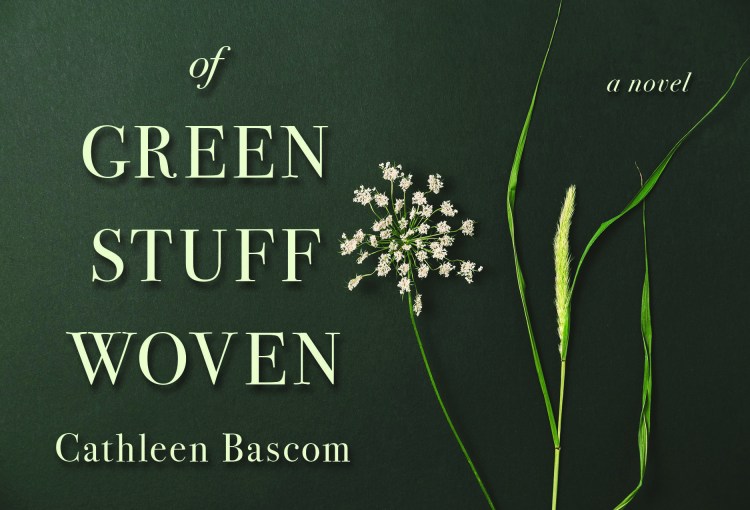
Of Green Stuff Woven

The creation? Or the cash?
As flood waters rise around their historic cathedral and beloved prairie restoration, so do the stakes of the parish’s choice.

Around the globe, small bands of eco-activists are working to save one reef, one rain forest, one river at a time. Of Green Stuff Woven depicts a group of native gardeners who are restoring tall grass prairie on land connected to their historic Episcopal cathedral in the middle of the financial district in Des Moines, Iowa. They are approached by hotel developers and are caught between their passion for the prairie and their need for money to repair their crumbling cathedral. Of course, the parish’s largest donor stands to profit from the deal.

Of Green Stuff Woven springs from the experience of two devastating floods and of the burgeoning prairie restoration movement. Told by Brigid Brenchley—kind and quirky cathedral dean—it is Brigid’s tale but also the story of a faith community: hardworking plant enthusiasts, parishioners of varied persuasions; the bishop; the mayor; and most importantly a beloved cathedral member who loses his home and life to the flood. All converge like spokes in the spinning wheel of this decision. The book articulates the depths of Anglican spirituality that undergird creation care ministry, while compassion highlights the plight of threatened plant species and people vulnerable to climate events, and challenges us all to examine the decisions we make in the stewardship of our land.

It does all this while taking readers on a good ecclesiastical
romp and retaining realistic hope.

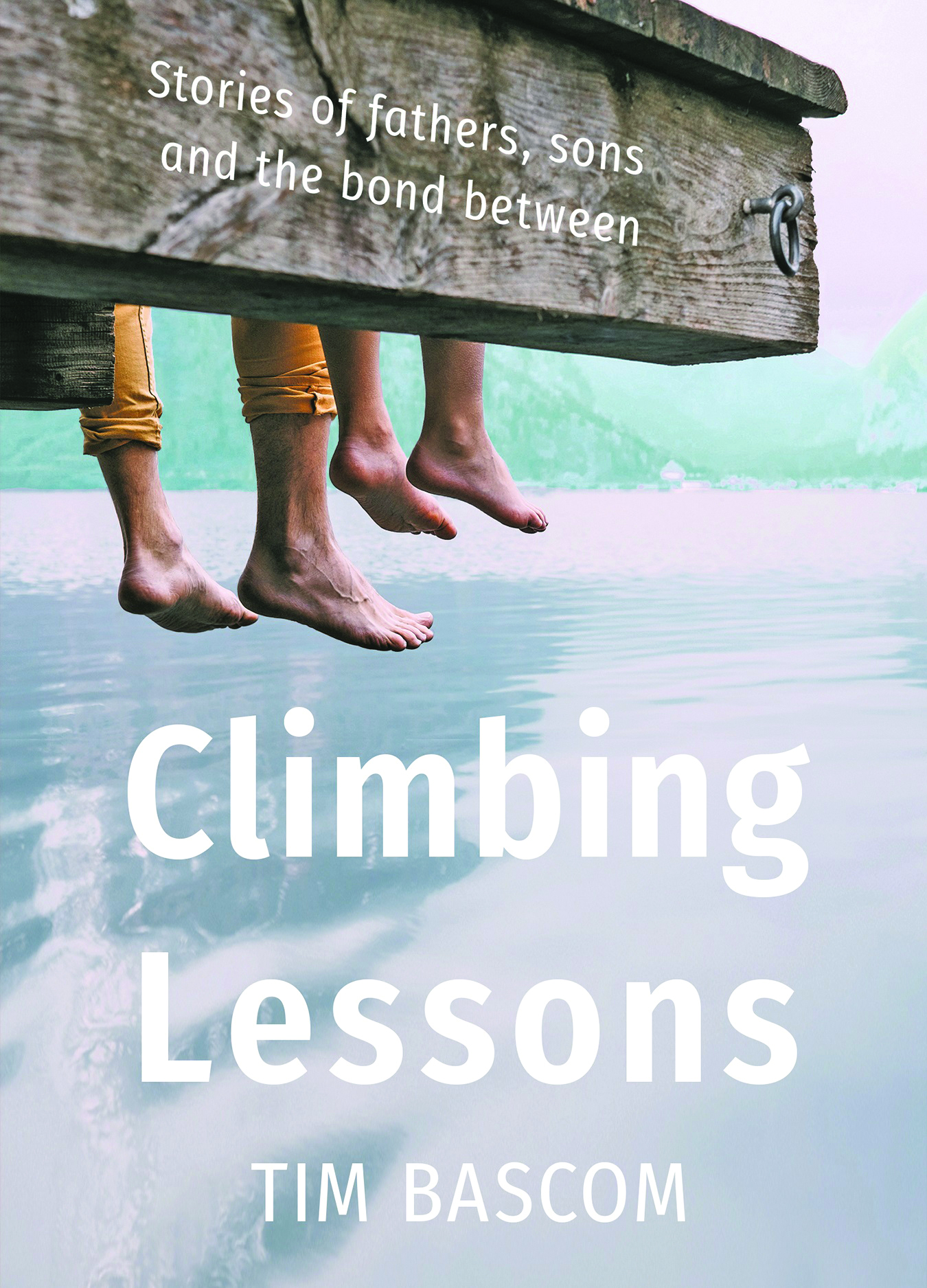
Climbing Lessons – Synopsis

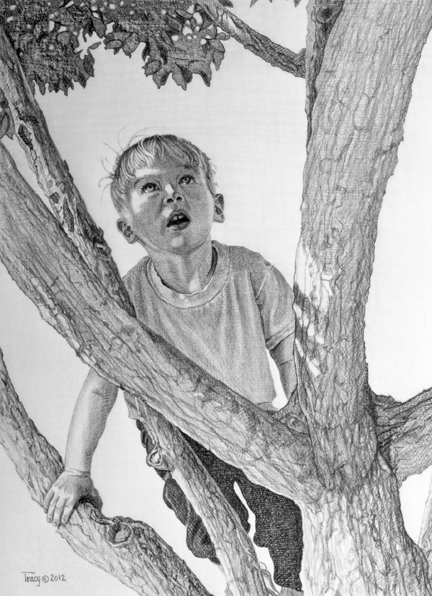
Climbing Lessons is an inter-linked collection of nonfiction stories about the unsung tenderness between fathers and sons. These playful, sometimes poignant tales span three generations, beginning in small-town Kansas with a kind but bumbling father who is a physician. His middle son, Tim, narrates as his accidentprone father shows the way. For instance, Tim describes how the over-eager Doc, while trying to demonstrate how to climb a huge sycamore, ends up dropping 12 feet and landing flat-out on his back, stunned and unable to move. When the fallen father recovers enough to speak, he announces, “So that’s how it’s done,” and in that moment, he becomes an emblem for all fathers—trying to lead, failing, but getting back up to continue showing the way.

Over time, Tim pushes back against his father, embarrassed when the older man makes himself too noticeable or when he wants to discuss a set of sex-ed tapes. After a year at college, Tim builds up the courage to admit he doesn’t really want to follow his father into the field of medicine. To his relief, his dad jokes that the reason he and his three brothers all became doctors like their father was that they lacked imagination.

Part of Tim’s individuation is falling in love with a woman named Cathleen,
who wants to serve as a clergy person, something women are not allowed to become in his parent’s church. Nevertheless, he breaks with tradition and ends up marrying her. In fact, after they have their first child and after that son nearly dies of “failure to thrive,” he becomes his son’s main caregiver while Cathleen goes full time as a Episcopal priest.

After a few more years, another son is born. Tim takes to telling the two boys bedtime stories that are thinly disguised tales about them as caveboys. Despite such adventure stories, however, the brothers won’t “tough it out” during a mountain hike. Instead, they fall into imaginative play based on Pokémon cards. Tim is irritated until he realizes that their make-believe game—not unlike the roles he assigns them as caveboys—is helping to complete the hike, getting them above timberline.

The boys eventually rebel, just as Tim once rebelled. In their teens, they form
a rock band and start disappearing to gigs. One night, the oldest staggers into his parent’s bedroom high on hallucinogenic mushrooms. Tim feels out of his depth, but there is no time to reflect. After his own dad shatters a hip, Tim must race home to Kansas. Instead of drawing on his father’s strength and experience to care for his boys, he must assume a caretaking role.

Still feeling “off-balance,” Tim goes hiking with his younger son, middle-aged brother, and nephew. Together, the four males climb through hail and rain, high into the Colorado Rockies, and Tim takes great pleasure seeing the strong bond between his 16-year-old and the mischievous nephew. The two teens make their own separate shelter and wake early to fish. Nothing about their vitality and their general happiness suggests what will happen a few months later—when Tim learns that his nephew has committed suicide.

As the whole extended family moves through this terrible crisis, Tim’s sons
go off to college, charting their own courses. They both struggle with the loss of their cousin. However, they are clearly thankful to rejoin the larger clan at a Thanksgiving reunion, and they show great affection for their aging grandfather, now hobbled by his repaired hip. When Tim receives news that his father, now in his 80’s, has had a massive heartattack, he and his wife and sons race back to Kansas once again, joining his mother and brothers, their wives, and all the grown children. The old patriarch makes one last remarkable recovery, cheering them with his resilient humor. However, in the Intensive Care Unit he conveys to Tim that, though he will keep trying to show the way, someone else will have to take that role soon. “You’ll get
your turn,” he says to his middle-aged son. “Trust me, we all do.”

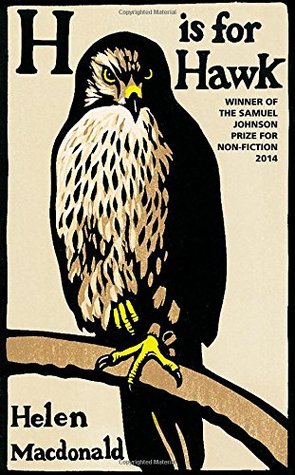
Falconry Made Fascinating: Mcdonald’s memoir H is for Hawk

For anyone who has felt an affinity with animals, particularly birds, this memoir—H is for Hawk—is not to be missed.  What a remarkable evocation of animal life and of the animal dimension of our human existence.  The author, Helen Macdonald, seems to have lived so closely with her trained goshawk, Mabel, that she has inhabited the creature.  Or perhaps it has inhabited her. 

After months of patient practice, they hunt together, and though Macdonald intuitively hates killing, she is so drawn into the catch-and-kill mindset of Mabel, that, as she explains, the bird takes her to “the very edge of being human” then beyond.  “I crept and walked and ran. I crouched.  I looked.  I saw more than I’d ever seen.  The world gathered about me.  It made absolute sense.  But the only things I knew were hawkish things, and the lines that drew me across the landscape were the lines that drew the hawk: hunger, desire, fascination, the need to find and fly and kill.”  And when Mabel the goshawk finally succeeds, bringing down a pheasant then mauling it in her powerful talons, Mcdonald has to face her own participation in the violence, a participation that will be familiar to anyone who has ever hunted at all.

Mcdonald’s genre-bending memoir was written after the sudden unexpected death of her father, which was a cataclysmic event.  He was a widely respected journalistic photographer and a winsome, caring father, so Mcdonald’s book is, in large part, a meditation on grieving.  It is also a kind of specialist’s guidebook, rife with quirky hawk-training lore.  And it is part biography, toggling back and forth from the life of the English author T.H. White, famous for his novel The Sword in the Stone, which feature hawks used by medieval hunters.  However, the real marvel of this peculiar memoir, with all its emphasis on falconry, is not so much how Mcdonald becomes attuned to the goshawk but how she realizes her humanness in the process.  When Mabel is mantling wings over yet another captured rabbit, “tail spread, eyes burning, nape-feathers raised in a tense and feral crouch,” the human side of Macdonald is reawakened.  Out of mercy, she reaches out to the squealing animal, breaking its neck by pushing its head away while yanking its back legs.  She doesn’t shy from her role, as distressing as it is, but she experiences a return to the sensitive, cognitive awareness that she has been suppressing during this mindless time of grieving.  “Hunting,” she realizes, “makes you animal, but the death of an animal makes you human.”

Her recollection of that paradoxical moment reminds me of the first time I shot a dove, using an arrow I had tethered with fishing line so that it would not fly beyond the chain link fence of my boarding school in Ethiopia.  Hitting any bird had been theoretical until then, and I was sick with what I had done, as the dove flapped weakly, hanging upside down in a cedar tree, impaled and dangling from the tangled line.  Panicked by my approach, it made a tremendous effort to fly free, wings smacking branches and head bobbing.  I was too startled and disturbed to touch it even after it hung still, so my more-experienced friend had to slide it off the arrow and pinch its small skull between curled fingers, snapping his wrist so that the head detached and the bird plummeted to the ground, out of pain.

Believe it or not, that moment increased my love for birds.  It didn’t stop me from hunting for more, killing a couple dozen with that bow and later with a slingshot.  But with every bird that I got to know in this violent way—sneaking under a canopy of trees and aiming slowly and eventually holding the stunned creature in my hand where I could feel the soft dustiness of its feathers and the galloping of its small heart—I was becoming more in love, so that after a year or two of such teenage assassinations and after even teaching myself how to stuff the birds taxidermy-style, emptying out their skulls and preserving their skin and tiny bones with powdered borax, I would never again want to shoot one, would only want to know more about them, and to recognize them by their silhouettes or their peculiar markings or their varied songs.  The Lilac-Breasted Roller or Emerald Kingfisher or Superb Starling, and eventually all the wonderful American birds, including predators such as the Bald Eagle and Kestrel and Barred Owl or, like Mcdonald’s own trained Mabel, the Goshawk.

I fell so in love with birds that now I go to the woods at a state park here in Iowa and stop often to watch—shooting photos if I can.  And I lament the decline of bird populations all around the world, which journalists have declared to be down by three billion in the U.S. and Canada alone, or roughly one in three.  I feel guilty, too, about having contributed to this worldwide decline, although I don’t think I could have ever come to care about birds as much as I do if I had not had such moments of direct contact.

In the writing of this book, Mcdonald went to the edge of being human and beyond, but she returned, and we are all the better for it.  It is in her humanness that she helps us to understand better the tortured, conflicted failures of T.H. White as a novice hawker and the depths of our own grief after losing someone we love.  But more importantly, Mcdonald shows us the need to come back to community, back into being who we were made to be.  Mabel, the goshawk, has brought her back to being Macdonald the human, and that is the true marvel of their unique, sometimes disturbing memoir.  I recommend the book wholeheartedly!

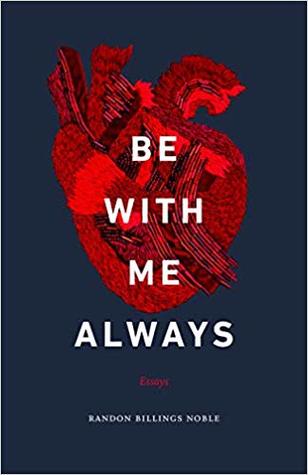
An Essay Collection that Will Wake You Up Emotionally

BE WITH ME ALWAYS is a rich read, full of relational insight. The essays have a risky “out there” feel because the author, Randon Billings Noble, is not afraid to explore her own raw emotions. I relate to her inclination to go back in time, exploring the relationships that haunt her the most. Like her, I look back at moments when relationships heated up or teetered on the brink of dissolving or when, after a particularly hard break-up, I feared that maybe I would remain forever alone, clearly “incompatible.”

Noble, at times, seems in the thrall of an extreme desire for an impossibly intense romantic bond—which manifests most strongly when she describes a past lover who was, in a sense, her own personal “Dracula.” Her essays, which rely on surprising literary comparisons, bring to mind the forbidden relational dimensions in many stories and movies, reminding us how tantalizing those dimensions can be while at the same time raising the specter of emotional pain. Falling in love with Dracula is bound to end poorly because of his nature and because of the obsession he arouses. And the stories of star-crossed lovers are inevitably full of thwarted desire and loss. Somebody is going to get hurt.

One of the times Noble seems to stretch a bit too far for a relational analogy is when she likens herself to Ann Boleyn, admiring “the power to captivate a man, to enchant him, to possess him so fully that he thought of little else.” For Boleyn, the man in question was Henry the VIII, who repeatedly divorced or beheaded wives because of being so captivated. Boleyn must have known, at some level, what she was risking, and Noble seems a bit too willing to romanticize what was essentially pathological. But she probably knows this, and she bravely explores the terrain anyway.

I respect her intent to stay faithful to the man she eventually marries, letting go of the haunting lovers of her past and becoming a mother even though her unexpected twins threaten her sense of a future self. And I respect her honest admission that she is still sometimes haunted or pulled to the side romantically, as in her remarkably inventive essay “The Heart as a Torn Muscle.” Noble’s open admissions help me—and probably many other readers—to work through some of the hard-to-process subterranean stuff that we feel but never talk about.

Funny, Disturbing, but Worth Reading

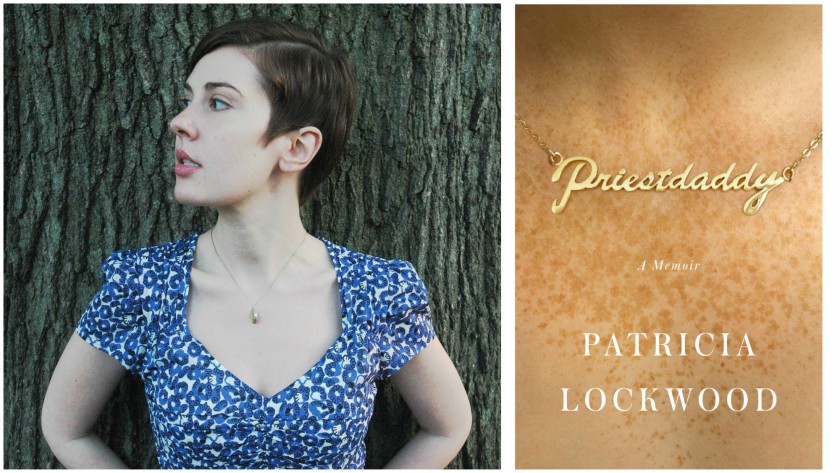
Patricia Lockwood, knock on wood, is one of the funniest memoir writers I have encountered, and that’s coming from a veteran reader with shelves of dog-eared memoirs.  In essence, Priestdaddy is her irreverent send-up of life in the care of a bombastic Catholic priest, who, because of a special exemption for already-wedded converts, is allowed to serve parishes while raising his own family.

This Father Lockwood is no ordinary father.  When not wearing a clergy collar, he lounges around the rectory in tighty whiteys eating beef jerky or he retreats into his study to play incomprehensibly loud riffs on an electric guitar.  Lockwood describes his music-making as follows: “When the biological urge comes upon him, he lifts his curvaceous red guitar out of its case with a hushed reverence and cradles it in his arms.  Then he plugs it into the most powerful amp that’s legal in the state of Missouri and begins rocking himself into a frenzy.  It sounds like a whole band dying in a plane crash in the year 1972.  He plays the guitar like he’s trying to take off women’s jeans, or like he’s standing nude in the middle of a thunderstorm and calling down lighting to strike his pecs.”

While reading Priestdaddy, I laughed out loud and often, but I also found Lockwood’s humor disconcerting.  Maybe that’s because I’m a father myself and she lampoons her father so mercilessly that I feel embarrassed for not only him but all us poor male schmucks who are indicted by association. I find her a bit too clever for her own pen.  And I suspect that, like many humorists, the laughter is a way to cope with tough emotions that lie underneath, emotions that just start to peek through by the end of the book.

Priestdaddy can be compared to the comical memoirs of Anne Lamott or to the ever-expanding series of family stories by David Sedaris.   But those two writers have less snark in their voices, more self-awareness and generosity.  Perhaps Lockwood, who has a wonderful ability with language, has been a bit too shaped by her earlier work as a poet.  Like most contemporary poets she seems at great pains to avoid one unforgivable cardinal sin: sentimentality.  It’s my opinion that, if she was a bit less afraid of her own emotions, she might not need to ridicule as much and she might be able to shed more light on what is at the core of the memoir, how her father’s role in the church—and his support of the male hierarchy in Catholicism—did damage to herself and how she has been able to move beyond that damage.

A final note: there is one chapter in this memoir that makes the whole book worth reading, and that is the chapter “Voice,” which is essentially a stand-alone lyric essay about Lockwood’s singing voice vs. her sister’s singing voice vs. that of a girl who was the best singer in their chorus.  Presumably this piece is about singing, but it is really about much much more—such as transcendence and femininity and pain and “the intolerable sadness of the human condition.” If you read it, you will see that Lockwood moves far beyond comedic entertainment, letting her emotions ring through in a completely engaging way.  Like I said, it is worth the whole price of the book, so don’t hesitate to buy a copy.

Want a new perspective on fatherhood?

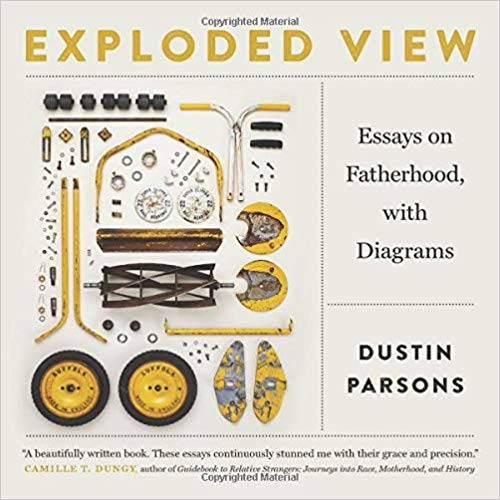
Exploded View: Essays on Fatherhood, with Diagrams 
by Dustin Parsons (Goodreads Author)

Tim Bascom‘s review 

Using diagrams and short, lyric essays, Dustin Parsons offers the reader a fascinating look inside the head of a young father, with all the attendant shadows of his own childhood present as he moves into marriage and parenting. This is not a book that builds a narrative arc, pulling the reader forward by dramatic action or suspense. It’s a quiet, thoughtful book full of reflective insight and lovely language. Read it like you would read a collection of poetry, and you will be satisfied.

New book accepted for publication

Great news.  Light Messages Publishing has just accepted my new collection of stories about the ever-changing and always-the-same bond between boys and dads. Titled Climbing Lessons, it will appear alongside my wife’s debut novel, Of Green Stuff Woven, which is an environmental novel written from the perspective of a female Dean overseeing a struggling Episcopal cathedral during devastating floods.  The publisher is intent on releasing these two books together so that Cathleen and I can come to stores, campuses, churches, and book clubs, sharing our different but related perspectives!  Look for the books to appear in early 2020!

Ethiopia Receives President Obama at a Critical Juncture

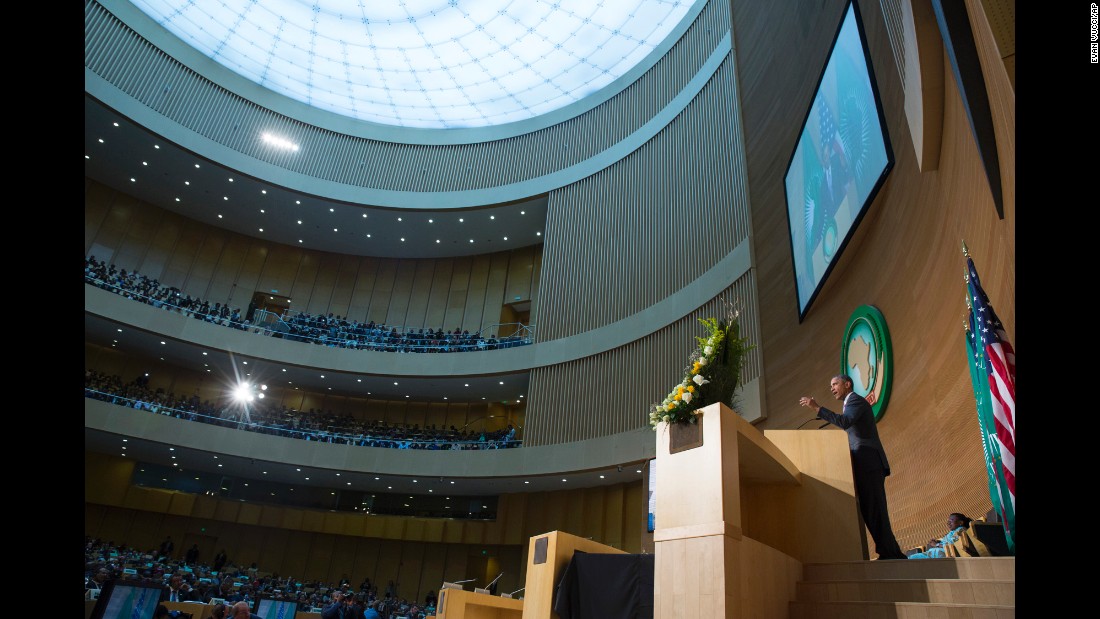
This summer President Obama did something no standing U.S. president has done before–he went to Ethiopia. There’s a reason for his decision. He was able to speak to the African Union, headquartered in Ethiopia, meeting with 54 national leaders.  He was able to press for freedom of the press and fair elections in Ethiopia, where many journalists have been jailed according to human rights organizations.  Ethiopia is the second largest African country (in terms of population) and the one with the largest military.  It is threatened by al-Shabab incursions in the south, coming out of Somalia.  President Obama was able to speak with regional leaders about this concern and the larger concern of destabilization in the neighboring nation of South Sudan, where rival tribes are locked in conflict, causing a huge refugee crisis.  All of this is good news for a region of Africa that needs to be connected to the outer world and in open dialogue about vital issues.

Arab Spring turns to Fall?

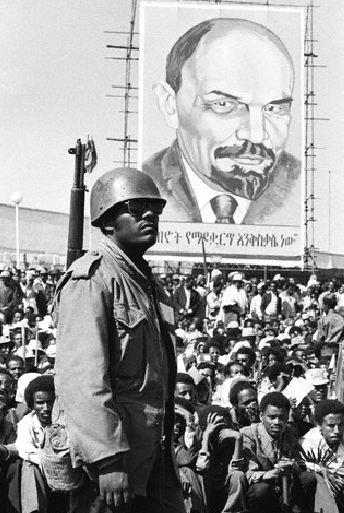
As we watch refugees pouring out of Libya on illegal boats (sometimes thrown off in the Mediterranean) or see tourists bombed in a Tunisian museum or read about the supposed Egyptian reformer President Morsi being sentenced to 20 years in jail for torture of protesters, we may wonder what happened to the Arab Spring that seemed so promising.  Revolution is started by people who have had enough and want reform.  Unfortunately, it often gets hijacked by others who want personal and complete power.  Certainly that was the case in Ethiopia, where hopeful Ethiopian Christians joined the ranks of protesters and celebrated the fragile possibility of a new and better society back in 1974 when the Emperor Hailie Selassie was removed from power.  Then came the counter-wave of terror, as Col. Mengistu took absolute control and clamped down on anyone who might be perceived as a threat, including any religious leaders who did not knuckle under to his imposed authority.  I hope my memoir–Running to the Fire–has relevance in this sense.  It is a look at an earlier “Ethiopian Spring” that turned too quickly to Fall–or perhaps I should say an Ethiopian planting season that turned to drought.  I’m enthused about a recent radio interview about the book, which was conducted by Bob Leonard on KRLS, based in the Pella and Knoxville area of Iowa. It was aired as part of the show “In Depth,” and it goes in depth into the origins of the book, the history behind the revolution in Ethiopia, the role of missions in Ethiopia, and more. If you have time, you can listen to the podcast at http://kniakrls.com/2015/04/in-depth-author-tim-bascom/.
To listen to another shorter interview, this time by Rob Dillard at Iowa Public Radio, you can go to the following link: http://iowapublicradio.org/post/teen-runs-fire-1970s-ethiopia. It’s an honor to be included on both radio shows!